
At Advanced Pet Care Clinic, we often hear pet owners say, "I thought my dog was just slowing down with age."
However, what appears to be normal aging can sometimes be an early sign of hip dysplasia in dogs. Difficulty rising from a lying position, reluctance to jump into the car, stiffness after activity, or a change in gait should not be ignored.
The earlier hip dysplasia is identified, the more opportunities our team has to help protect mobility, manage discomfort, and support a dog's quality of life. At Advanced Pet Care Clinic, we help dogs stay active and comfortable through early diagnosis, personalized treatment plans, and therapies designed to support long-term joint health.
What Is Hip Dysplasia in Dogs?
Hip dysplasia in dogs occurs when the hip joint does not develop properly. In a healthy hip, the ball of the femur fits securely within the socket, allowing smooth movement. With hip dysplasia, the joint may be loose or unstable, leading to inflammation, discomfort, and arthritis over time.
Some dogs show signs at a young age, while others do not develop noticeable symptoms until adulthood.
What Causes Hip Dysplasia in Dogs?
Genetics play an important role in the development of hip dysplasia. Large and giant breed dogs are commonly affected, including Labrador Retrievers, German Shepherds, Golden Retrievers, Rottweilers, Saint Bernards, and Great Danes.
However, hip dysplasia can occur in dogs of almost any breed or size.
Other factors that can contribute to joint problems include:
- Rapid growth during puppyhood
- Excess body weight
- Poor muscle development
- Excessive stress on developing joints
Early Signs of Hip Dysplasia in Dogs
One of the most common things we hear from pet owners is, "My dog isn't limping. He's just slowing down."
In some cases, what appears to be slowing down may actually be discomfort caused by hip dysplasia or arthritis associated with the condition.
Signs to watch for include:
- Difficulty getting up after resting
- Stiffness after exercise
- Reluctance to jump into vehicles or onto furniture
- Reduced stamina during walks or play
- Hind-end weakness
- Bunny hopping while running
- Changes in posture or gait
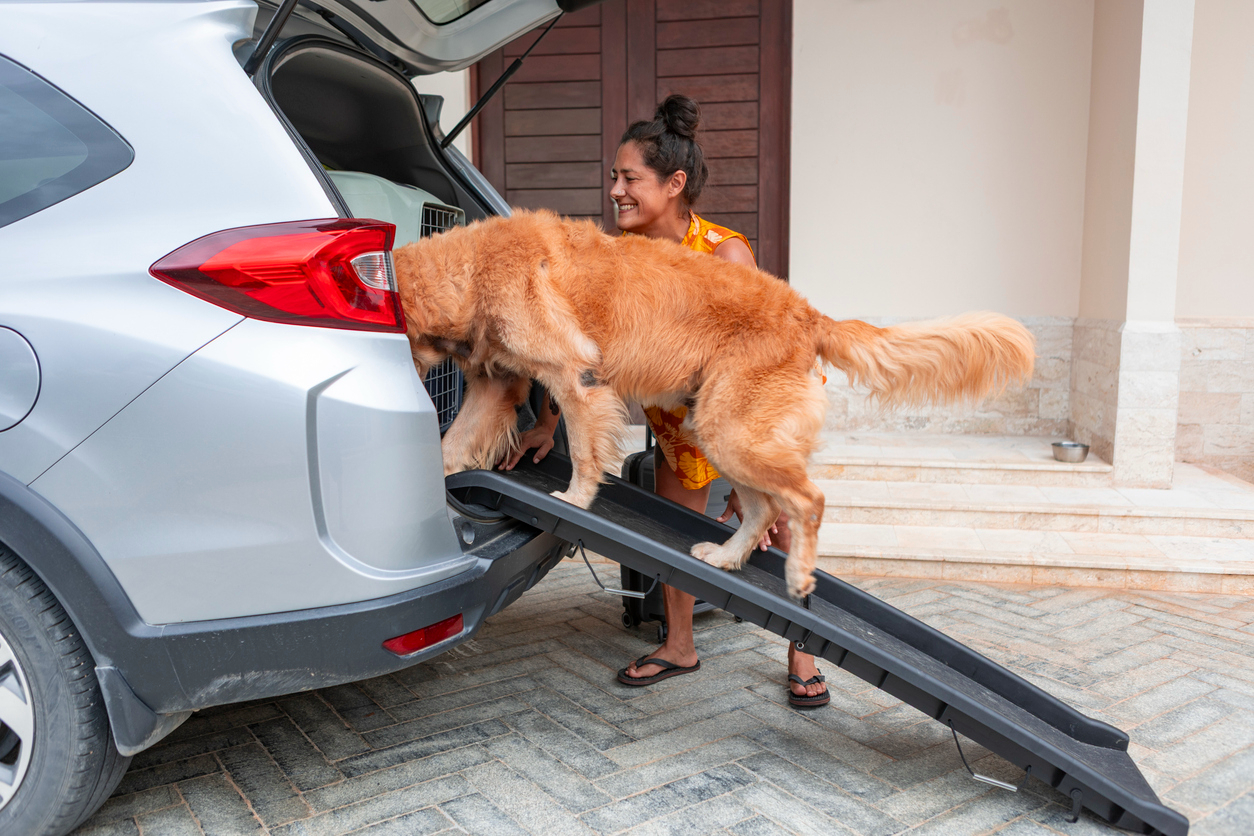
Many dogs are remarkably good at adapting to discomfort. A dog that no longer wants to jump into the car or seems tired after shorter walks may be showing signs of discomfort long before a noticeable limp develops.
How We Diagnose Hip Dysplasia
When a dog comes to Advanced Pet Care Clinic for mobility concerns, our team begins with a physical examination and a discussion about what you have noticed at home.
We evaluate range of motion, joint flexibility, muscle condition, gait, posture, and overall mobility. Diagnostic imaging helps us assess the hip joints and look for signs of instability, arthritis, or other orthopedic conditions.
In some cases, our veterinarians may recommend specialized hip evaluations that provide additional information about joint structure and stability.
Advanced Pet Care Clinic offers both Orthopedic Foundation for Animals (OFA) hip and elbow evaluations and PennHIP (University of Pennsylvania Hip Improvement Program) assessments.
OFA evaluations assess the structure of the hip and elbow joints. PennHIP assessments measure hip laxity, or looseness within the hip joint, which is associated with an increased risk of developing hip dysplasia.
As a PennHIP-certified practice, Advanced Pet Care Clinic offers these advanced evaluations as part of our commitment to helping dogs maintain lifelong mobility and joint health.
Can Hip Dysplasia Be Prevented?
Hip dysplasia cannot always be prevented because genetics play such a significant role. However, there are steps pet owners can take to support healthy joint development.
Maintain a Healthy Weight
Excess weight places additional strain on the joints. Maintaining a healthy body condition is one of the most important ways to support mobility and joint health.
Provide Appropriate Exercise
Regular activity helps build the muscles that support the hips. Puppies benefit from exercise that matches their age and physical development without placing excessive stress on growing joints.
Choose Responsible Breeders
When selecting a puppy, ask breeders whether they perform OFA or PennHIP evaluations on their breeding dogs. These evaluations help identify dogs with healthier hips and support responsible breeding practices.
Monitor Mobility Changes Early
At Advanced Pet Care Clinic, we encourage owners to schedule an evaluation when they first notice stiffness, difficulty rising, or changes in activity level.
Supporting Dogs with Hip Dysplasia
A diagnosis of hip dysplasia does not mean a dog can no longer enjoy an active life.
Many dogs continue to enjoy walks, playtime, swimming, and family activities when their condition is identified early and managed appropriately.
At Advanced Pet Care Clinic, our approach focuses on preserving mobility, supporting joint function, and helping dogs remain comfortable as they age. Because hip dysplasia often leads to arthritis over time, our goal is not simply to diagnose the condition. Our goal is to help dogs maintain mobility, strength, and comfort so they can continue enjoying the activities they love.
Weight Management
Maintaining a healthy weight is one of the most effective ways to reduce stress on the hip joints and improve comfort.
Rehabilitation Therapy
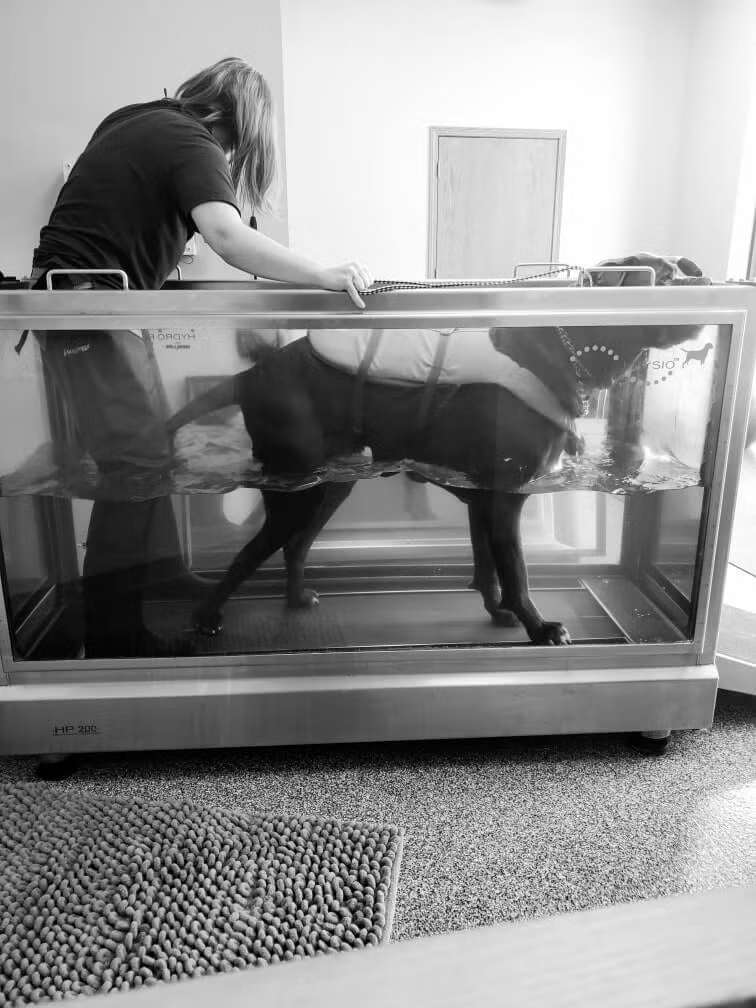
Rehabilitation therapy can help improve strength, flexibility, balance, and mobility. Depending on a dog's needs, therapy may include therapeutic exercises, stretching, balance work, strengthening activities, and use of our underwater treadmill.
The underwater treadmill allows dogs to exercise with less impact on their joints while building muscle strength and improving range of motion.
Laser Therapy
Therapeutic laser treatment can help reduce inflammation and discomfort associated with hip dysplasia and arthritis. Laser therapy is frequently used alongside rehabilitation therapy to support comfort and improve overall function.
Veterinary Orthopedic Manipulation (VOM)
Our team may also recommend Veterinary Orthopedic Manipulation (VOM), a non-invasive therapy that uses a specialized handheld instrument to identify and address areas of neurologic and musculoskeletal tension.
VOM can help improve comfort, mobility, and overall function in some dogs with orthopedic conditions.
Ongoing Monitoring
Regular evaluations allow our team to monitor mobility, assess comfort levels, and adjust treatment recommendations as needed.
When to Schedule an Evaluation
If your dog has difficulty getting up after resting, hesitates before jumping, seems less interested in walks, or simply is not moving the way they once did, it may be time for an evaluation.
At Advanced Pet Care Clinic, our team has experience evaluating orthopedic conditions and helping dogs maintain mobility throughout their lives. Early recognition of hip dysplasia in dogs can make a meaningful difference in comfort, activity level, and long-term joint health.
Contact Advanced Pet Care Clinic to schedule an evaluation if you have concerns about your dog's mobility.
Frequently Asked Questions
Can puppies have hip dysplasia?
Yes. Hip dysplasia develops as a dog grows, and some puppies begin showing signs at a young age.
What is the difference between OFA and PennHIP evaluations?
OFA evaluations assess the structure of the hip and elbow joints using radiographs. PennHIP assessments measure hip laxity and can help identify dogs at increased risk for developing hip dysplasia earlier in life.
Can a dog with hip dysplasia still live an active life?
Many dogs with hip dysplasia continue to enjoy active, happy lives with appropriate weight management, rehabilitation therapy, laser therapy, VOM, and ongoing veterinary care.