
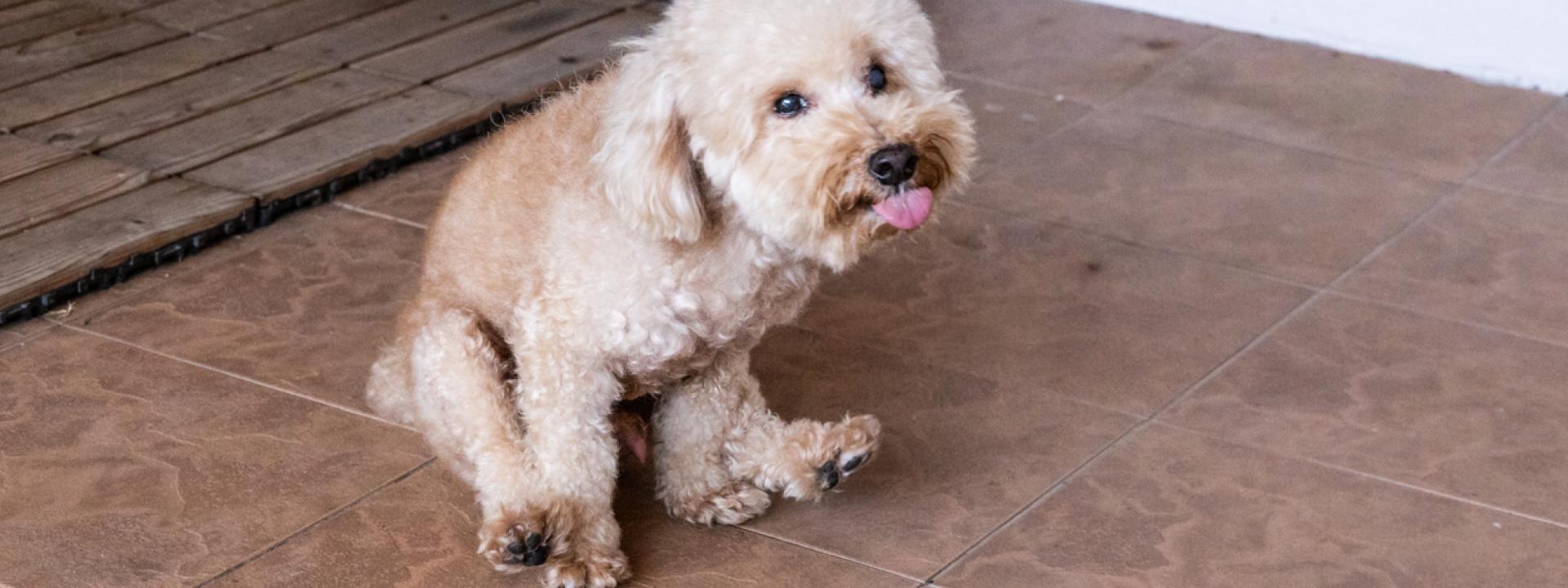
If you have ever seen your dog sit down and drag their rear end across the carpet, you have probably wondered what is causing it. Dog scooting can look funny, but it often means something is irritating or bothering the area around your dog’s bottom.
Anal gland problems are one of the most common reasons that dogs scoot, but they are not the only possibility. Parasites, skin irritation, allergies, digestive problems, and other conditions can cause similar behavior.
At Advanced Pet Care Clinic in Cedar Falls, we can help determine why your dog is scooting and recommend treatment based on the underlying cause.
What Is Dog Scooting?
Dog scooting is when a dog sits with the rear end on the ground and pulls or drags the bottom forward using the front legs.
An occasional scoot after going to the bathroom does not always mean there is a serious problem. However, repeated scooting usually indicates irritation, itching, pressure, or discomfort around the anus or rear end.
The important question is not simply how to stop the scooting, but why your dog is scooting in the first place.
Anal Gland Problems Are a Common Cause of Dog Scooting
Dogs have two small anal sacs, commonly called anal glands, located just inside the anus. These sacs contain a strong-smelling fluid that normally empties when a dog has a bowel movement.
Sometimes the sacs do not empty properly. Fluid can build up and cause the sacs to become impacted. Anal sacs can also become inflamed, infected, or develop an abscess. Cornell University College of Veterinarian Medicine explains more about anal sac diseases in dogs.
When the anal glands become uncomfortable, a dog may scoot in an attempt to relieve pressure or irritation. Dogs with anal gland problems may also lick or bite at the area or seem uncomfortable when sitting or having a bowel movement.
If an anal gland becomes infected or abscessed, the area can become painful and swollen. An abscess can eventually rupture through the skin, so this is something that should be evaluated rather than treated at home.
Can Dog Scooting Mean Worms?
Yes, worms can sometimes cause dog scooting, although they are not the most common cause. Tapeworms are particularly associated with scooting because segments of the worm can pass out of the intestine and irritate the area around the anus. You may notice small, rice-like segments around your dog's anus, in the stool, or where your dog sleeps.
Other types of worms and intestinal parasites can also cause irritation that may lead to scooting. Depending on the type of parasite, your dog may have other signs as well, such as diarrhea, changes in appetite, or weight loss.
Because scooting alone cannot tell you whether your dog has worms or another parasite, we may recommend a fecal test if parasites are suspected.
Allergies and Skin Irritation Can Also Cause Scooting
A dog that is itchy around the rear end may scoot even when the anal glands are normal.
Environmental allergies, food-related sensitivities, flea allergies, or other skin problems can cause itching and inflammation. Dogs with allergies may also lick their paws, scratch their ears, chew at their skin, or develop recurrent skin and ear problems.
Advanced Pet Care Clinic offers allergy testing when an underlying allergy is suspected. Identifying the cause of the irritation can help guide the right treatment rather than simply trying to control the scooting.
Diarrhea and Changes in Stool Can Play a Role
Normal bowel movements help put pressure on the anal sacs so they can empty naturally. When a dog has repeated soft stools or diarrhea, the sacs may not empty as effectively.
Diarrhea can also irritate the skin around the anus and make a dog want to scoot or lick the area.
If your dog has both scooting and ongoing diarrhea, it is important to mention both symptoms during the veterinary visit. The problem may involve more than the anal glands.
Depending on your dog’s symptoms, testing may include a fecal examination, bloodwork, or other diagnostics.
Are Home Remedies for Dog Scooting a Good Idea?
A quick search for dog scooting often brings up home remedies, including adding pumpkin or fiber to the diet, applying products to the area, or attempting to express the anal glands at home.
The problem is that dog scooting is a symptom, not a diagnosis. At Advanced Pet Care Clinic, we may recommend adding fiber to the diet for some dogs with anal gland problems. But first, we want to determine what is causing your dog to scoot. Fiber will not address a different problem, such as parasites, an infection, allergies, or skin irritation.
The same is true of expressing your dog's anal glands at home. If the glands are infected, abscessed, or otherwise abnormal, attempting to express them could cause pain or further irritation and will not treat the underlying problem. Improper technique can also injure the sensitive tissue around the glands.
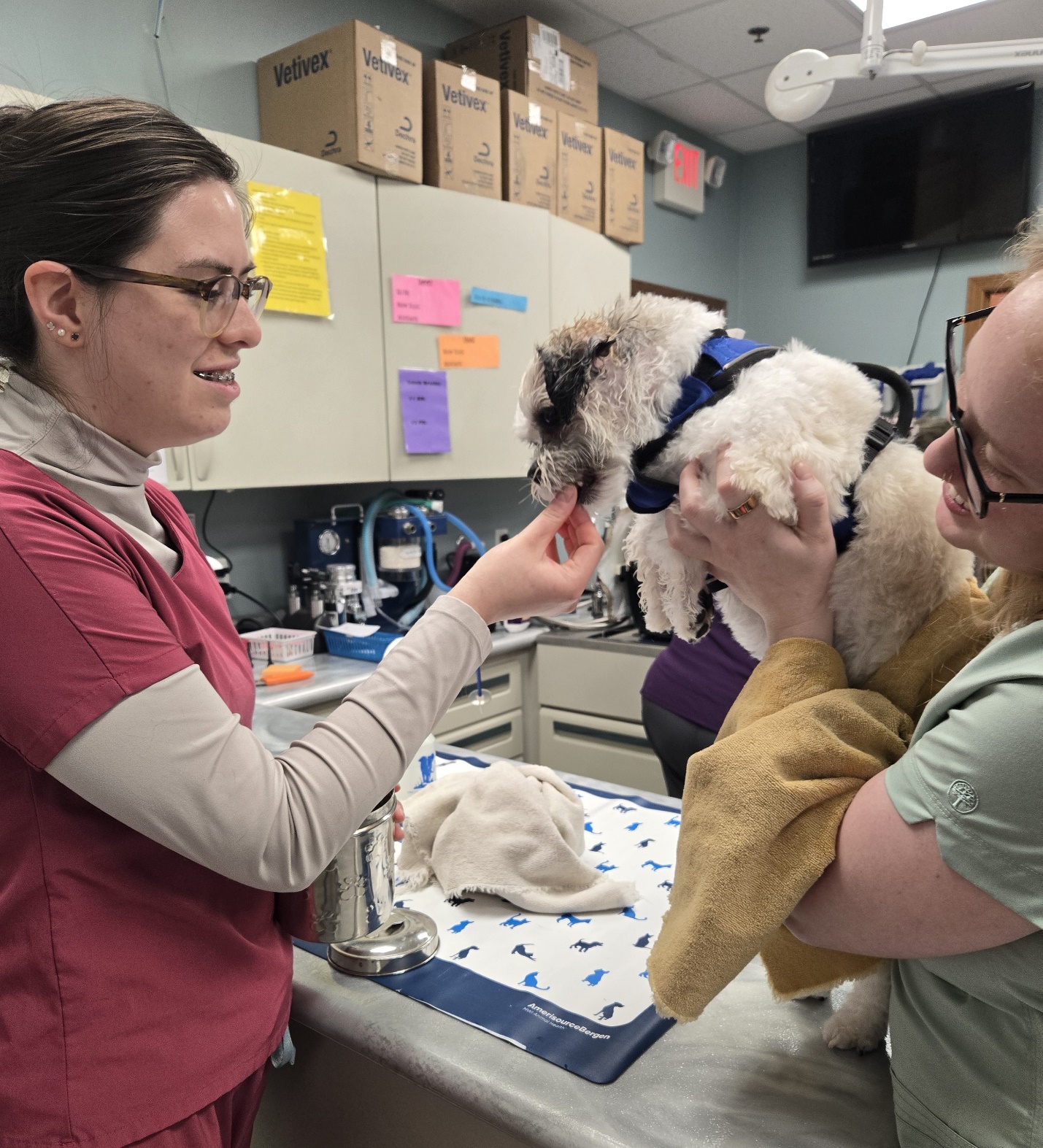
Our veterinary team can examine your dog to determine whether the anal glands are causing the scooting and check for infection or another problem. If your dog simply needs occasional anal gland expression and we determine that it can safely be done at home, we can show you the proper way to do it.
How Does a Veterinarian Find the Cause of Dog Scooting?

The first step we take is an examination of the area around the anus and anal glands.
If the anal glands are full or impacted, the veterinarian can determine whether they simply need to be emptied or whether there are signs of inflammation, infection, an abscess, or another problem.
If the anal glands appear normal, other possibilities can be considered based on your dog’s symptoms.
For example, a fecal test can help look for intestinal parasites. Skin changes elsewhere on the body may point toward allergies or another dermatologic problem. Diarrhea or changes in bowel movements may suggest a gastrointestinal issue. Swelling, drainage, bleeding, or significant pain can require additional evaluation.
Advanced Pet Care Clinic’s in-house diagnostic testing can help our veterinary team determine the appropriate next step for your dog.
When Should You Be Concerned About Dog Scooting?
One brief episode of scooting does not necessarily require a veterinary visit. Repeated or persistent scooting, however, deserves attention.
Contact Advanced Pet Care Clinic if your dog continues scooting or you notice:
- Frequent licking or biting around the anus
- A strong fishy or unpleasant odor
- Redness or swelling
- Blood or discharge
- A wound next to the anus
- Pain when sitting or having a bowel movement
- Difficulty passing stool
- Ongoing diarrhea
- Tapeworm segments around the anus or in the stool
- A sudden change in behavior because your dog appears uncomfortable
Any of these signs are a reason to have your dog evaluated, especially if the scooting is repeated or persistent. Severe pain, marked swelling, blood, or drainage can indicate a more serious anal gland problem, including infection or an abscess, and should be addressed promptly.
Find Out Why Your Dog Is Scooting
Dog scooting is easy to notice, but the reason behind it is not always obvious. Anal gland problems are common, but parasites, allergies, skin irritation, digestive problems, and other conditions can also cause dogs to drag their bottoms across the floor.
That is why simply treating the scooting at home is not always the best approach. Finding the underlying cause allows the problem to be treated appropriately and can help prevent your dog from becoming increasingly uncomfortable.
If your dog has started scooting repeatedly or is showing other signs of irritation around the rear end, contact Advanced Pet Care Clinic in Cedar Falls to schedule an examination. Our veterinary team can determine what is causing the problem and recommend the appropriate treatment.