
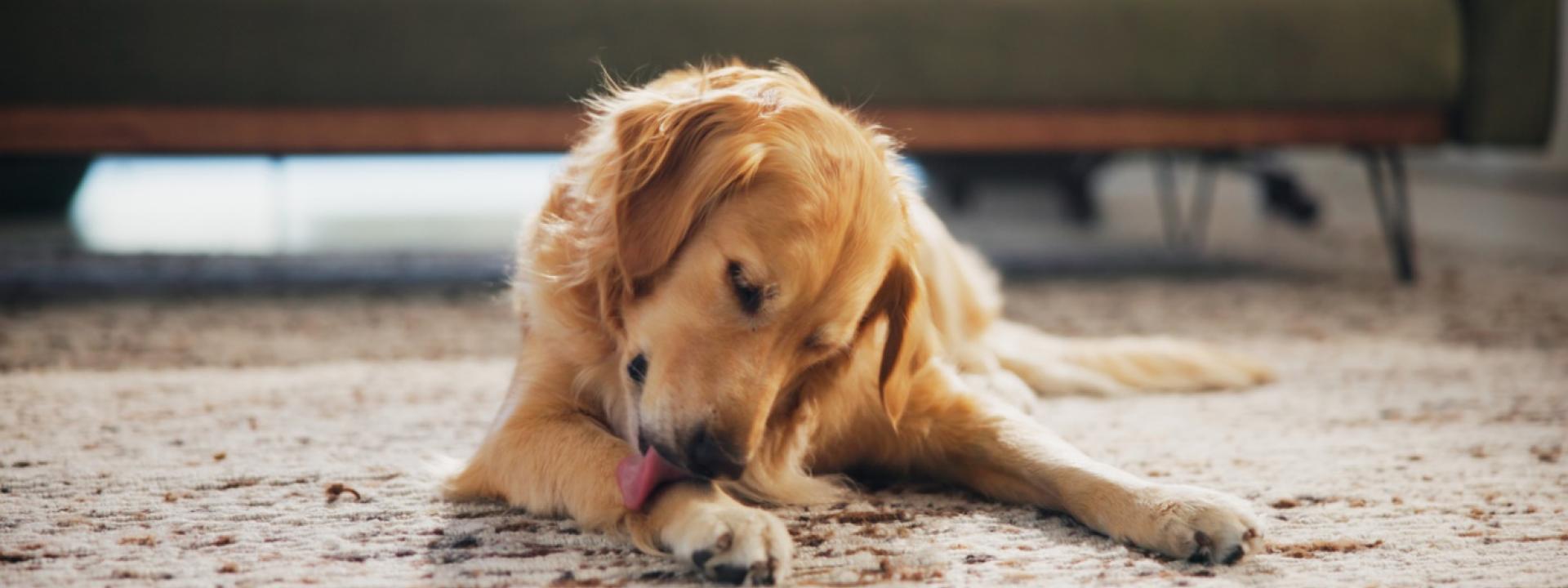
Many dogs lick their paws occasionally as part of normal grooming. After spending time outdoors, dogs may lick their paws to remove dirt, grass, or small debris caught between their toes.
However, when paw licking becomes frequent or persistent, it may signal irritation or discomfort that should be evaluated.
At Advanced Pet Care Clinic, paw licking is a behavior we frequently evaluate during exams. Dogs in Cedar Falls often spend time exploring grassy yards, neighborhood parks, and wooded walking areas, which means their paws can easily come into contact with irritants or small objects.
Because dogs rely on their paws for everything from daily walks to running and playing, even minor problems can lead to noticeable discomfort.
Understanding the possible causes of paw licking can help pet owners recognize when a quick paw check at home may be enough and when it may be time to schedule a veterinary visit.
Why Is My Dog Licking Their Paws?
Occasional paw licking is normal behavior. Dogs may lick their paws to clean off mud, grass, or other debris after being outdoors.
However, persistent paw licking can indicate that something is irritating the paws or causing discomfort.
Signs that paw licking may require attention include:
- Repeated licking throughout the day
- Chewing or biting at the paws
- Red or irritated skin
- Hair loss around the toes
- Limping or favoring one paw
When licking continues for long periods or is focused on one specific paw, it often means a dog is trying to relieve irritation or pain.
Debris From Grass and Outdoor Areas
Dogs in Cedar Falls frequently walk through grassy yards, parks, and natural areas where small debris can become trapped between the toes.
Common irritants include:
- Grass seeds
- Small twigs or splinters
- Burrs from weeds
- Dirt or gravel
Even small pieces of debris can cause irritation. Dogs often respond by licking or chewing the area in an attempt to remove whatever is bothering them.
Checking your dog’s paws after outdoor activity can help prevent minor irritations from developing into larger problems.
Minor Cuts or Paw Pad Irritation
Dogs can develop small cuts or scrapes on their paw pads from rough surfaces or sharp objects. During colder months in Iowa, sidewalks and roads are often treated with salt or de-icing chemicals, which may irritate sensitive paw pads.
When the skin becomes irritated, dogs often lick the area in an attempt to soothe the discomfort. Unfortunately, excessive licking can worsen irritation and slow the healing process.
If you notice redness, swelling, or cracks in the paw pads, a veterinary exam may be needed.
Nail Problems
Cracked, broken, or overgrown nails can also cause paw discomfort and lead to licking. Because nails contain nerves and blood supply, even a small nail injury can be painful.
Dogs with nail problems often focus their licking on one specific toe. Regular nail trimming helps prevent many nail-related issues.
Skin Infections Between the Toes
When dogs lick their paws repeatedly, moisture can build up between the toes. This environment allows bacteria or yeast to grow and may lead to infection.
Signs of infection may include:
- Red or inflamed skin between the toes
- Swelling or tenderness
- A noticeable odor from the paws
- Brown or reddish staining from saliva
Skin infections typically require veterinary treatment to be resolved fully.
Can Paw Licking Be Related to Health Problems?
In some cases, dog paw licking may be connected to health issues occurring elsewhere in the body.
Our veterinarians may evaluate possible underlying causes such as:
Allergies
Allergies can cause inflammation and itching in the skin, especially around the paws.
Digestive Sensitivities
Some dogs with food sensitivities or gastrointestinal issues may develop skin irritation that leads to paw licking.
Joint or Limb Pain
Dogs experiencing discomfort from arthritis or injuries may lick the paw of the affected leg because it is the easiest area for them to reach.
Stress or Compulsive Behavior
In some dogs, excessive licking becomes a habit related to boredom, stress, or anxiety.
When to See a Veterinarian
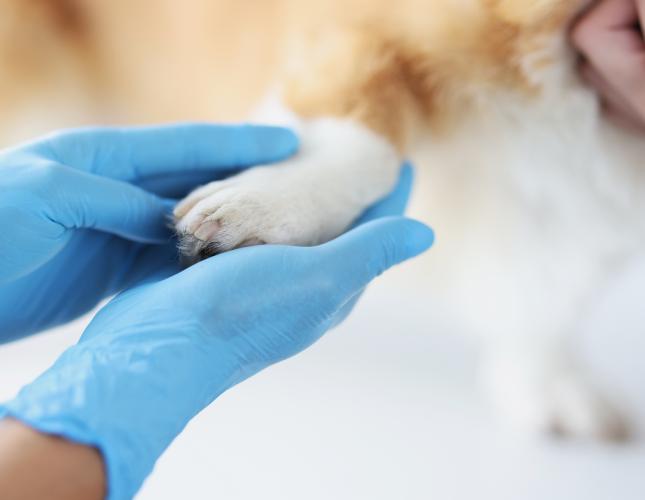
Occasional paw licking is normal, but persistent licking should not be ignored.
Contact Advanced Pet Care Clinic in Cedar Falls if your dog shows:
- Constant licking or chewing at the paws
- Limping or reluctance to walk
- Red or irritated skin
- Hair loss between the toes
- Swelling, odor, or discharge
Early evaluation can help prevent minor irritation from developing into a more serious condition.
Helping Your Dog Stay Comfortable
Healthy paws are essential for an active and comfortable dog. Regularly checking your dog’s paws, keeping nails trimmed, and monitoring changes in behavior can help identify problems early.
If your dog has been licking their paws more than usual, the team at Advanced Pet Care Clinic in Cedar Falls can help determine the cause and recommend the best treatment to keep your pet comfortable and active.
Frequently Asked Questions About Dogs Licking Their Paws
Can road salt or lawn chemicals cause paw licking?
Yes. During colder months, road salt and de-icing products used on sidewalks can irritate paw pads. Lawn fertilizers or yard treatments may also cause irritation. Rinsing your dog’s paws after walks can help remove these substances.
Why does my dog lick only one paw?
When licking is focused on one paw, it often suggests a localized problem such as a splinter, small cut, insect sting, or nail injury.
Can paw licking cause infections?
Yes. Constant licking keeps the skin moist, which can allow bacteria or yeast to grow between the toes.
Can dogs develop sores from licking their paws?
Yes. Persistent licking can damage the skin and sometimes lead to a condition called acral lick dermatitis, where repeated licking creates a chronic skin sore.